

Behind the Case: A Bear Poaching Investigation
Wildlife crime threatens biodiversity across the globe – but forensic science is a powerful tool in the fight to stop it.
Go beyond TV crime myths, magnifying glasses and Sherlock Holmes, and discover how real forensic techniques are used to investigate wildlife crime, focusing on the illegal poaching of bears in Europe. From the crime scene to the courtroom, forensic science answers the crucial questions of what happened, where, when and how – even in cases with limited resources.
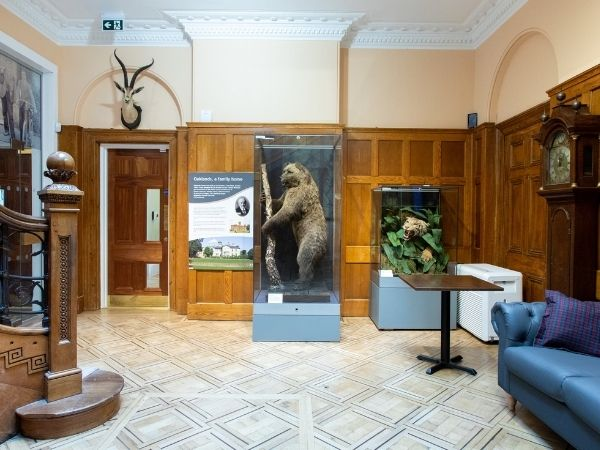
This talk explores how microscopic analysis of bear hair can play an important part in a poaching investigation, identify species and link suspects to illegal activity. Drawing on cutting‑edge research from a major European project, Nature First, you’ll hear how scientists are transforming the investigation of bear poaching, a long standing challenge in countries such as Romania and Bulgaria. You’ll even get the chance to examine hairs from the museum's own Boris the Bear under the microscope yourself!
Led by Prof Claire Gwinnett, alongside researcher Hayden Leigh, this fascinating talk offers a rare insight into the science behind wildlife crime investigations – and how tiny traces can make a big difference.
About the speakers:
Prof Claire Gwinnett is a Professor in Forensic and Environmental Science and Director of the Centre of Crime, Justice and Security at University of Staffordshire and also a National Geographic Explorer. With 20 years in the field she leads research and training in wildlife crime investigations, working with rangers, law enforcement, government and forensic veterinarians globally.
Hayden Leigh is a recent graduate of the University of Staffordshire, where they specialised in wildlife crime and animal hair analysis. Their work focused on developing and implementing a method for profiling hairs across the entire body of an animal, as well as evaluating the use of taxidermy exhibits as a source of forensic reference data, ahead of beginning a master’s degree at the same institution.
Sign in to your Museum of Chelmsford account to gain access to our member only benefits
Ticket options
Wildlife crime threatens biodiversity across the globe – but forensic science is a powerful tool in the fight to stop it.
Go beyond TV crime myths, magnifying glasses and Sherlock Holmes, and discover how real forensic techniques are used to investigate wildlife crime, focusing on the illegal poaching of bears in Europe. From the crime scene to the courtroom, forensic science answers the crucial questions of what happened, where, when and how – even in cases with limited resources.
This talk explores how microscopic analysis of bear hair can play an important part in a poaching investigation, identify species and link suspects to illegal activity. Drawing on cutting‑edge research from a major European project, Nature First, you’ll hear how scientists are transforming the investigation of bear poaching, a long standing challenge in countries such as Romania and Bulgaria. You’ll even get the chance to examine hairs from the museum's own Boris the Bear under the microscope yourself!
Led by Prof Claire Gwinnett, alongside researcher Hayden Leigh, this fascinating talk offers a rare insight into the science behind wildlife crime investigations – and how tiny traces can make a big difference.
About the speakers:
Prof Claire Gwinnett is a Professor in Forensic and Environmental Science and Director of the Centre of Crime, Justice and Security at University of Staffordshire and also a National Geographic Explorer. With 20 years in the field she leads research and training in wildlife crime investigations, working with rangers, law enforcement, government and forensic veterinarians globally.
Hayden Leigh is a recent graduate of the University of Staffordshire, where they specialised in wildlife crime and animal hair analysis. Their work focused on developing and implementing a method for profiling hairs across the entire body of an animal, as well as evaluating the use of taxidermy exhibits as a source of forensic reference data, ahead of beginning a master’s degree at the same institution.
Our payments are processed using : Payyo